
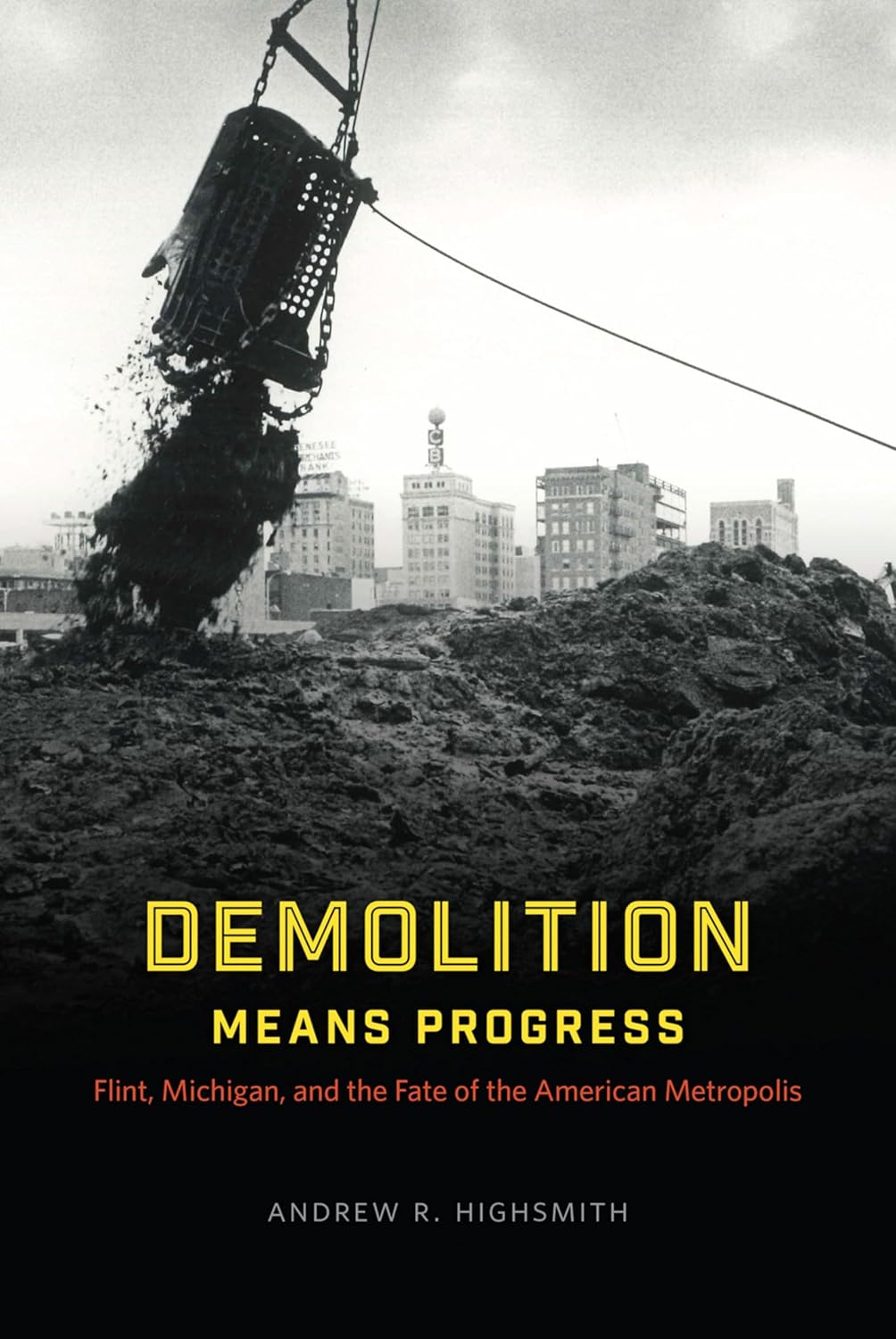
Demolition Means Progress: Flint, Michigan, and the Fate of the American Metropolis (Historical Studies of Urban America)
Product details
| Management number | 231621498 | Release Date | 2026/06/18 | List Price | $8.80 | Model Number | 231621498 | ||
|---|---|---|---|---|---|---|---|---|---|
| Category | |||||||||
"Tracks the fall of Flint, Michigan, once one of the nation's greatest industrial towns, now one of its poorest cities . . . compelling [and] powerful." —Kevin Boyle, National Book Award–winning author of Arc of JusticeIn 1997, after General Motors shuttered a massive complex of factories in the gritty industrial city of Flint, Michigan, signs were placed around the empty facility reading, "Demolition Means Progress," suggesting that the struggling metropolis could not move forward to greatness until the old plants met the wrecking ball. Much more than a trite corporate slogan, the phrase encapsulates the operating ethos of the nation's metropolitan leadership from at least the 1930s to the present. Again and again, the leaders of Flint and other municipalities tried to revitalize their communities by demolishing outdated and inefficient structures and institutions and overseeing numerous urban renewal campaigns—many of which yielded only more impoverished and more divided metropolises. After decades of these efforts, the dawn of the twenty-first century found Flint one of the most racially segregated and economically polarized metropolitan areas in the nation.In one of the most comprehensive works yet written on the history of inequality and metropolitan development in modern America, Andrew R. Highsmith uses the case of Flint to explain how the perennial quest for urban renewal—even more than white flight, corporate abandonment, and other forces—contributed to mass suburbanization, racial and economic division, deindustrialization, and political fragmentation. Challenging much of the conventional wisdom about structural inequality and the roots of the nation's "urban crisis," Demolition Means Progress shows in vivid detail how public policies and programs designed to revitalize the Flint area ultimately led to the hardening of social divisions."Brilliantly narrates the entire arc of 20th-century American industrialization at the scale of a single city, Flint, Michigan, and its suburbs . . . a remarkable book." —Robert Self, author of American Babylon: Race and the Struggle for Postwar Oakland Read more
| ASIN | B00Z0DM820 |
|---|---|
| XRay | Not Enabled |
| ISBN13 | 978-0226251080 |
| Edition | Reprint |
| Language | English |
| File size | 17.3 MB |
| Page Flip | Enabled |
| Publisher | The University of Chicago Press |
| Word Wise | Enabled |
| Print length | 399 pages |
| Accessibility | Learn more |
| Screen Reader | Supported |
| Part of series | Historical Studies of Urban America |
| Publication date | July 6, 2015 |
| Enhanced typesetting | Enabled |
Bestseller ranking
Midwest



Customers who viewed this product also viewed
History & Theory


Correction of product information
If you notice any omissions or errors in the product information on this page, please use the correction request form below.
Correction Request Form